Underwater Base Laid For New Pumping Station
Published on: 05/10/2026
Underwater Base Laid for New Pumping Station at Krammer Locks
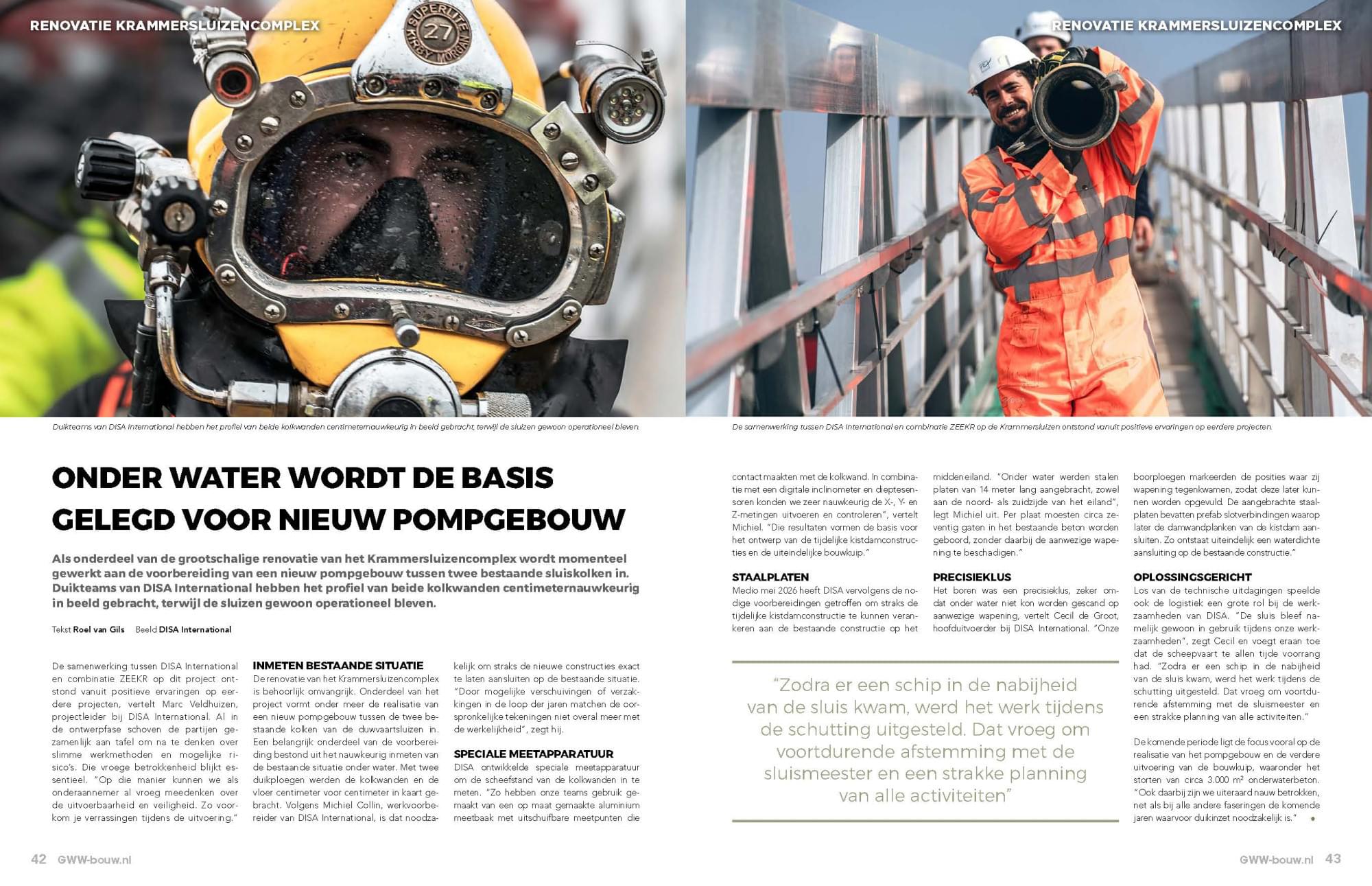
As part of the large-scale renovation of the Krammer Locks complex, preparations are underway for the construction of a new pumping station between two existing lock chambers. To support the project, DISA International carried out highly accurate underwater surveys of both lock walls while the locks remained fully operational.
The collaboration between DISA International and the ZEEKR consortium was built on successful partnerships from previous projects. From the earliest design stages, both parties worked together to identify efficient construction methods and address potential risks. This early involvement enabled construction specialists to contribute practical insights on feasibility and safety long before execution began.
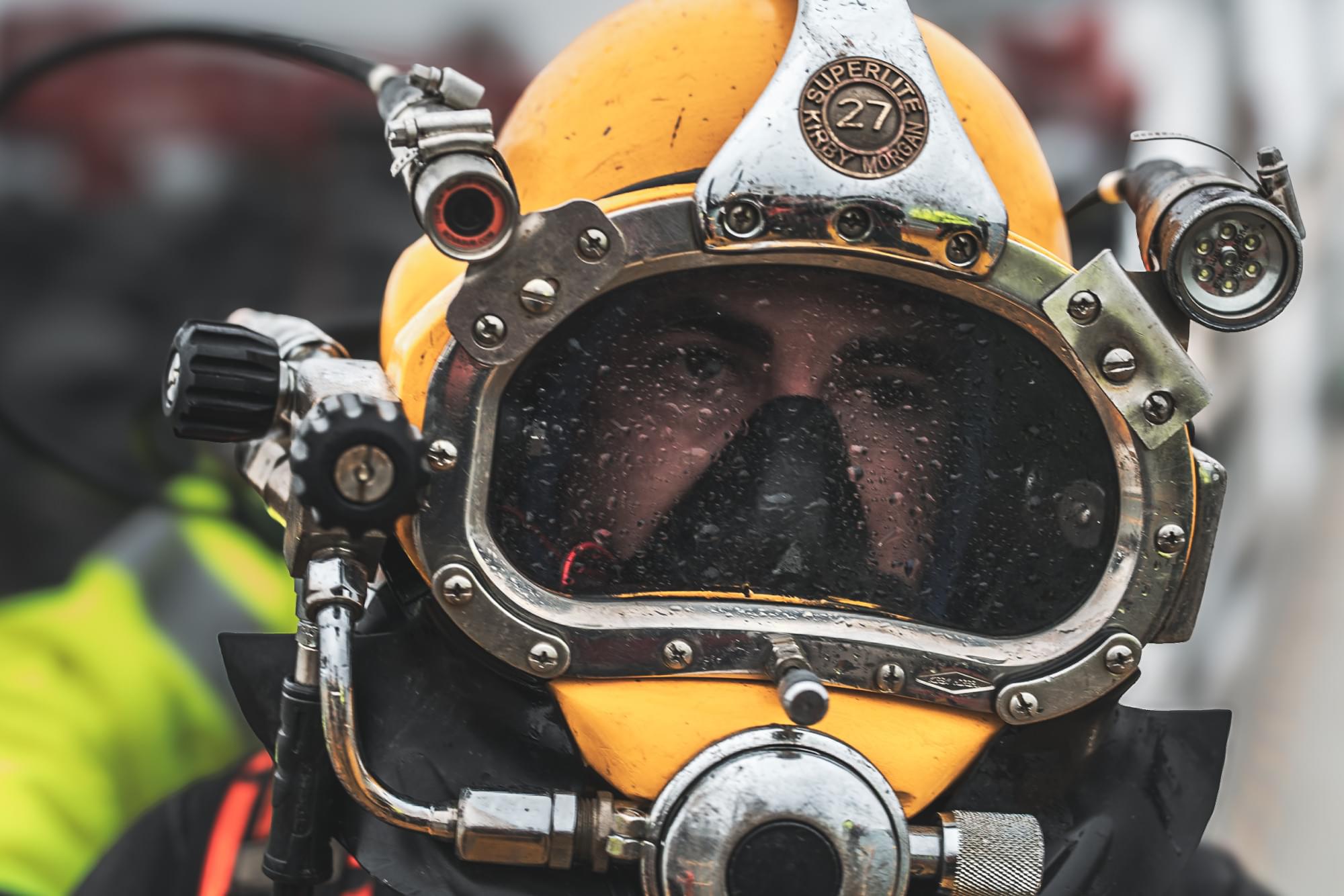
A key part of the preparation involved a detailed underwater survey of the existing structures. Using two diving teams, the lock walls and chamber floor were measured with centimeter-level accuracy. These measurements are essential to ensure that the new structures integrate seamlessly with the existing infrastructure, as decades of settlement and movement mean that original drawings no longer perfectly reflect current conditions.
To achieve the required precision, DISA International developed specialized surveying equipment capable of measuring wall inclinations and underwater geometry. By combining custom-built measuring tools with digital inclinometers and depth sensors, the team was able to collect and verify highly accurate three-dimensional data. This information forms the basis for the design of the temporary cofferdam structures and the final excavation enclosure required for construction.
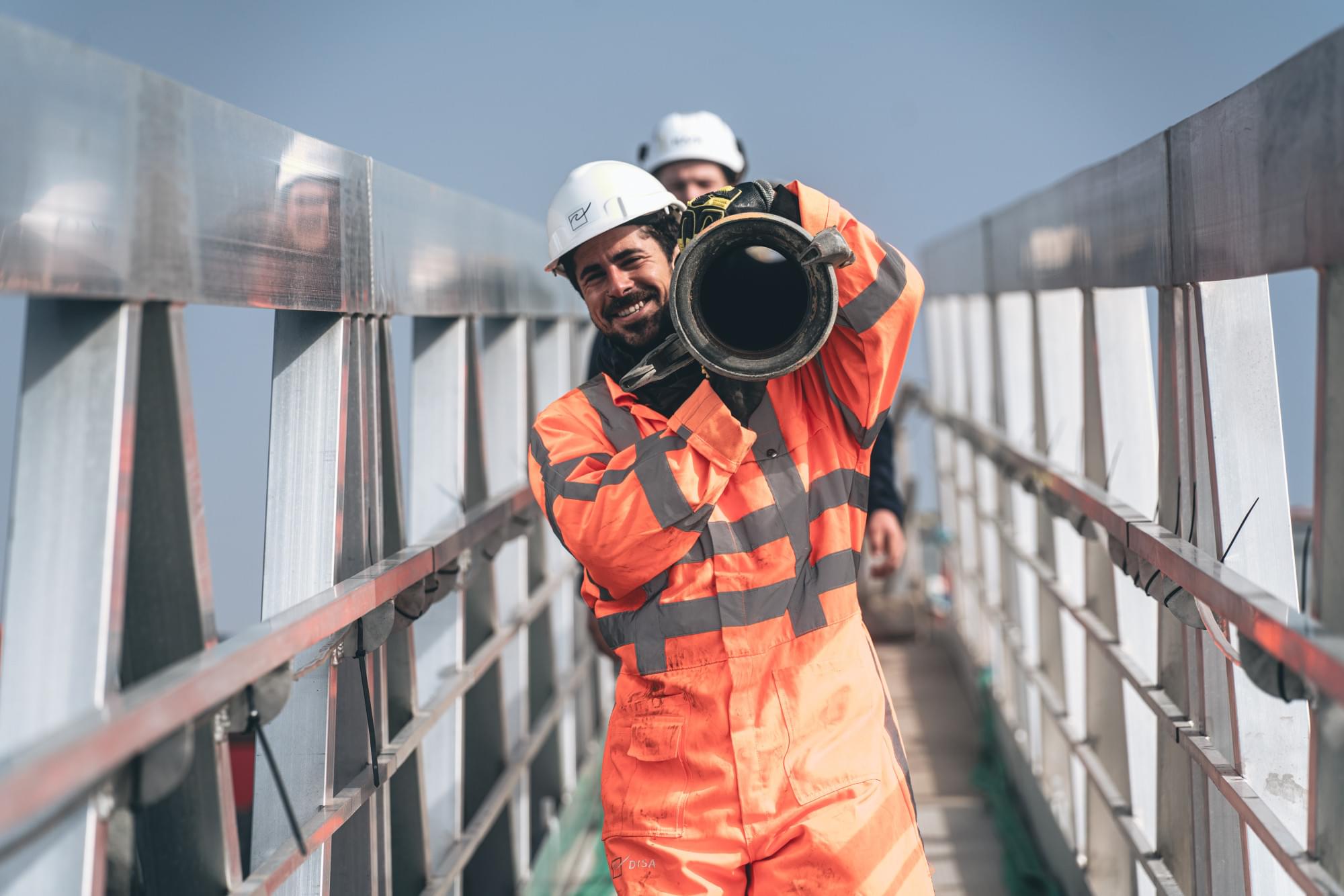
In May 2026, the company began preparations for anchoring the temporary cofferdam to the existing structure on the central island. Underwater installation teams fitted 14-meter-long steel plates on both the northern and southern sides of the island. Each plate required approximately seventy holes to be drilled into the existing concrete structure while carefully avoiding reinforcement steel.
The drilling operation demanded exceptional precision. Because reinforcement could not be scanned underwater, drilling crews carefully identified and marked locations where reinforcement bars were encountered. The installed steel plates include prefabricated connection systems that will later allow sheet piles to be connected directly to the existing structure, creating a watertight seal for the cofferdam.
Beyond the technical complexity, logistics presented an additional challenge. The lock remained fully operational throughout the works, with shipping traffic always taking priority. Construction activities had to be temporarily suspended whenever vessels approached the lock, requiring close coordination with lock operators and meticulous planning of all site operations.
In the coming phases, work will focus on constructing the new pumping station and completing the excavation enclosure, including the placement of approximately 3,000 square meters of underwater concrete. DISA International will continue to play a key role in these activities and in future project stages requiring specialist diving operations.