Precision work underwater
Published on: 16/10/2026
PRECISION WORK UNDERWATER
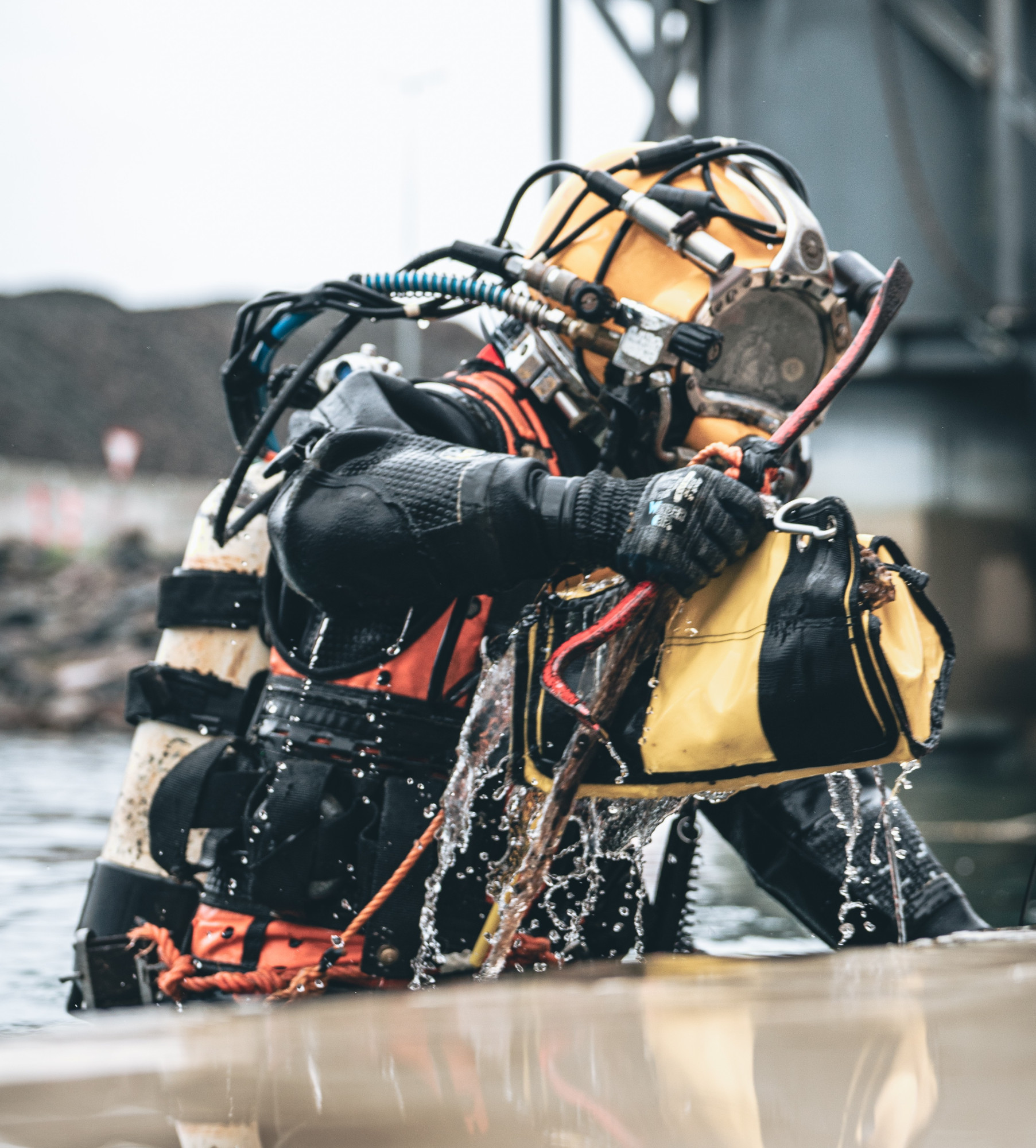
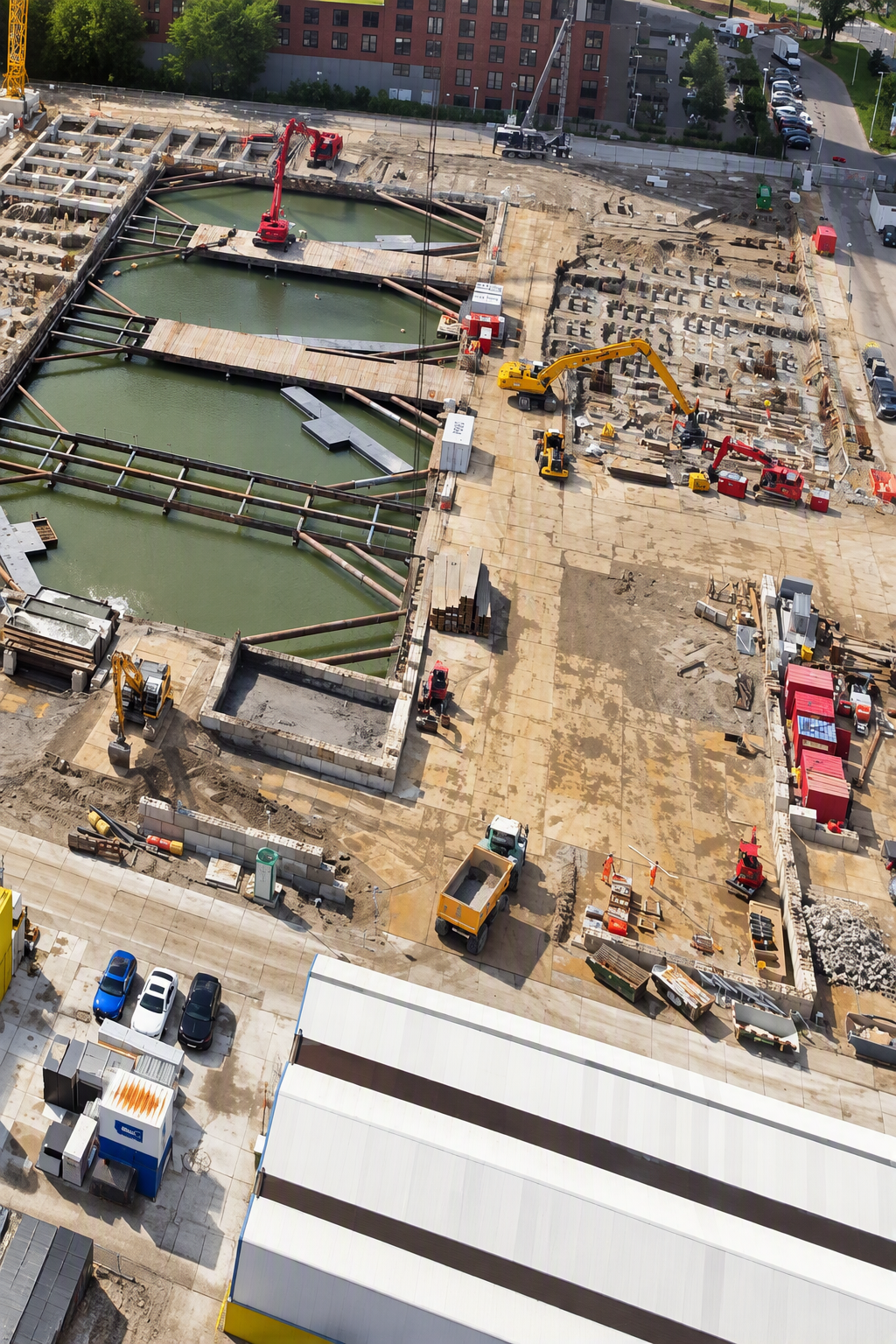
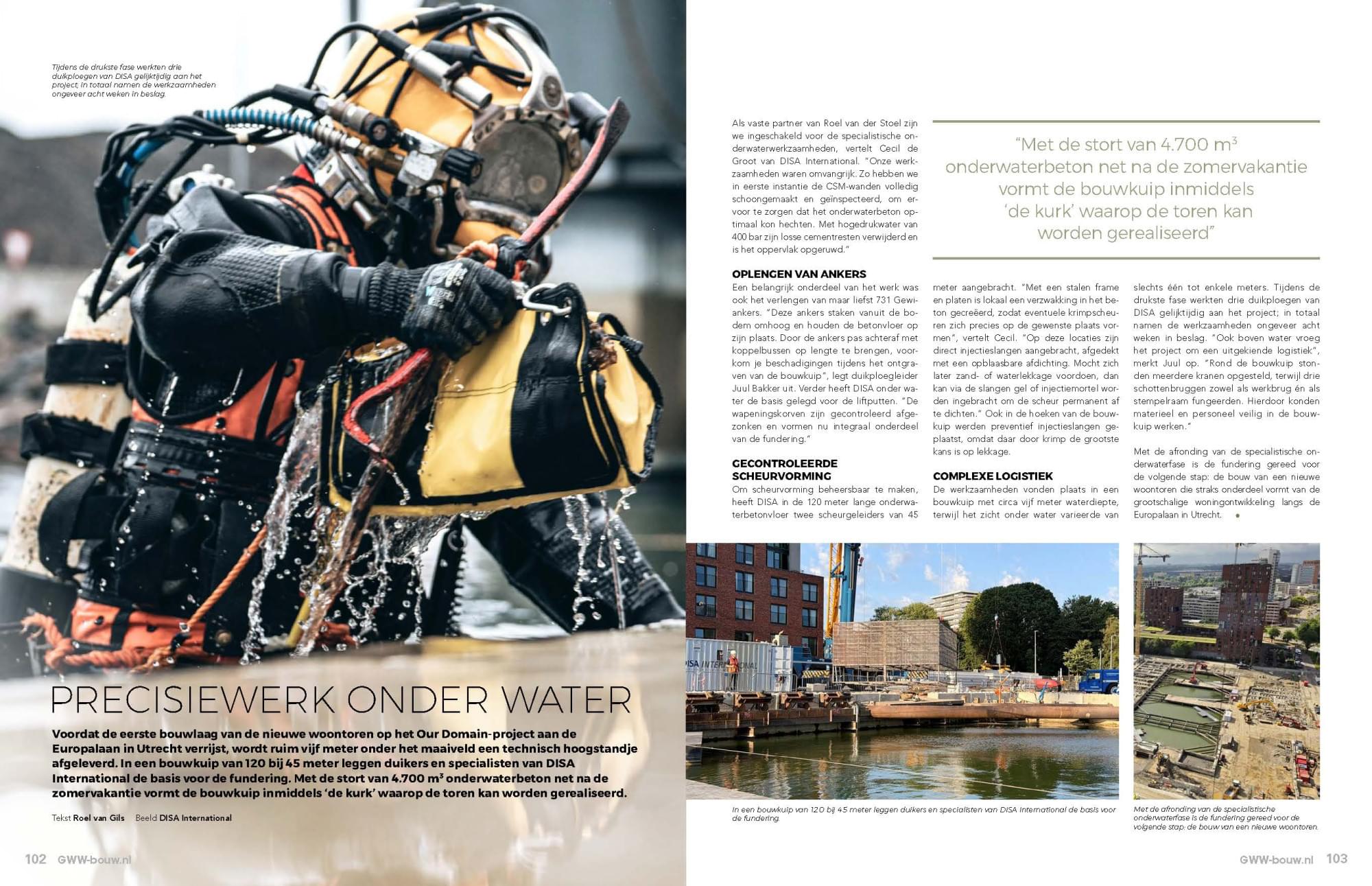
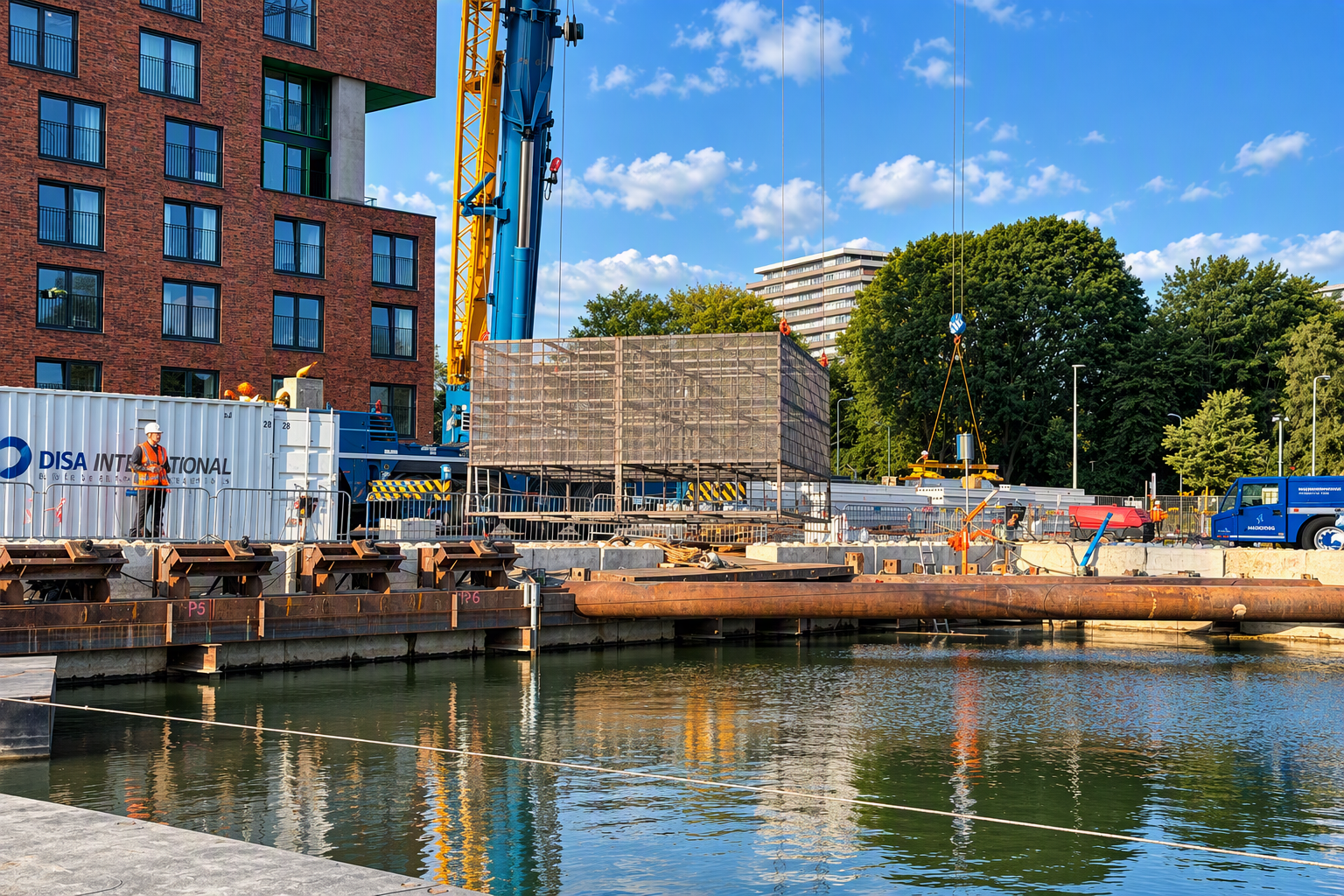
Before the first level of the new residential tower at the Our Domain project on Europalaan in Utrecht can rise above ground, a remarkable technical achievement is being carried out more than five metres below ground level. In a construction pit measuring 120 by 45 metres, divers and specialists from DISA International are laying the foundations. Following the placement of 4,700 m³ of underwater concrete shortly after the summer holidays, the construction pit now forms the “plug” on which the tower can be built.
As a regular partner of Roel van der Stoel, we were brought in to carry out the specialist underwater works, explains Cecil de Groot of DISA International.
“Our scope of work was extensive. Initially, we thoroughly cleaned and inspected the CSM walls to ensure optimum bonding of the underwater concrete. Using high-pressure water at 400 bar, loose cement residues were removed and the surface was roughened.”
EXTENDING THE ANCHORS
Another important part of the work involved extending no fewer than 731 Gewi anchors. “These anchors protruded from the bottom and hold the concrete floor in place. By extending the anchors afterwards using coupling sleeves, damage during excavation of the construction pit is prevented,” explains dive team leader Juul Bakker. DISA also prepared the foundations for the lift pits underwater. “The reinforcement cages were carefully lowered into position and now form an integral part of the foundation.”
CONTROLLED CRACK FORMATION
To keep cracking under control, DISA installed two 45-metre crack inducers in the 120-metre-long underwater concrete floor. “Using a steel frame and plates, a local weakness was created in the concrete so that any shrinkage cracks will form exactly where intended,” Cecil explains. “Injection hoses were installed directly at these locations and covered with an inflatable seal. Should sand or water leakage occur later, gel or injection grout can be introduced through the hoses to permanently seal the crack.” Injection hoses were also installed preventively in the corners of the construction pit, as these locations have the highest risk of leakage due to shrinkage.
COMPLEX LOGISTICS
The work was carried out in a construction pit with approximately five metres of water depth, while underwater visibility ranged from just one to a few metres.
During the busiest phase, three DISA dive teams worked simultaneously on the project, with the work taking approximately eight weeks in total.
“The project also required carefully planned logistics above water,” Juul notes.
“Several cranes were positioned around the construction pit, while three sheet-pile bridges served both as working platforms and as bracing structures. This allowed equipment and personnel to work safely within the construction pit.”
With the specialist underwater phase now completed, the foundations are ready for the next step: the construction of a new residential tower that will eventually form part of the large-scale residential development along Europalaan in Utrecht.